
Blackout Poetry
A Starter’s Guide
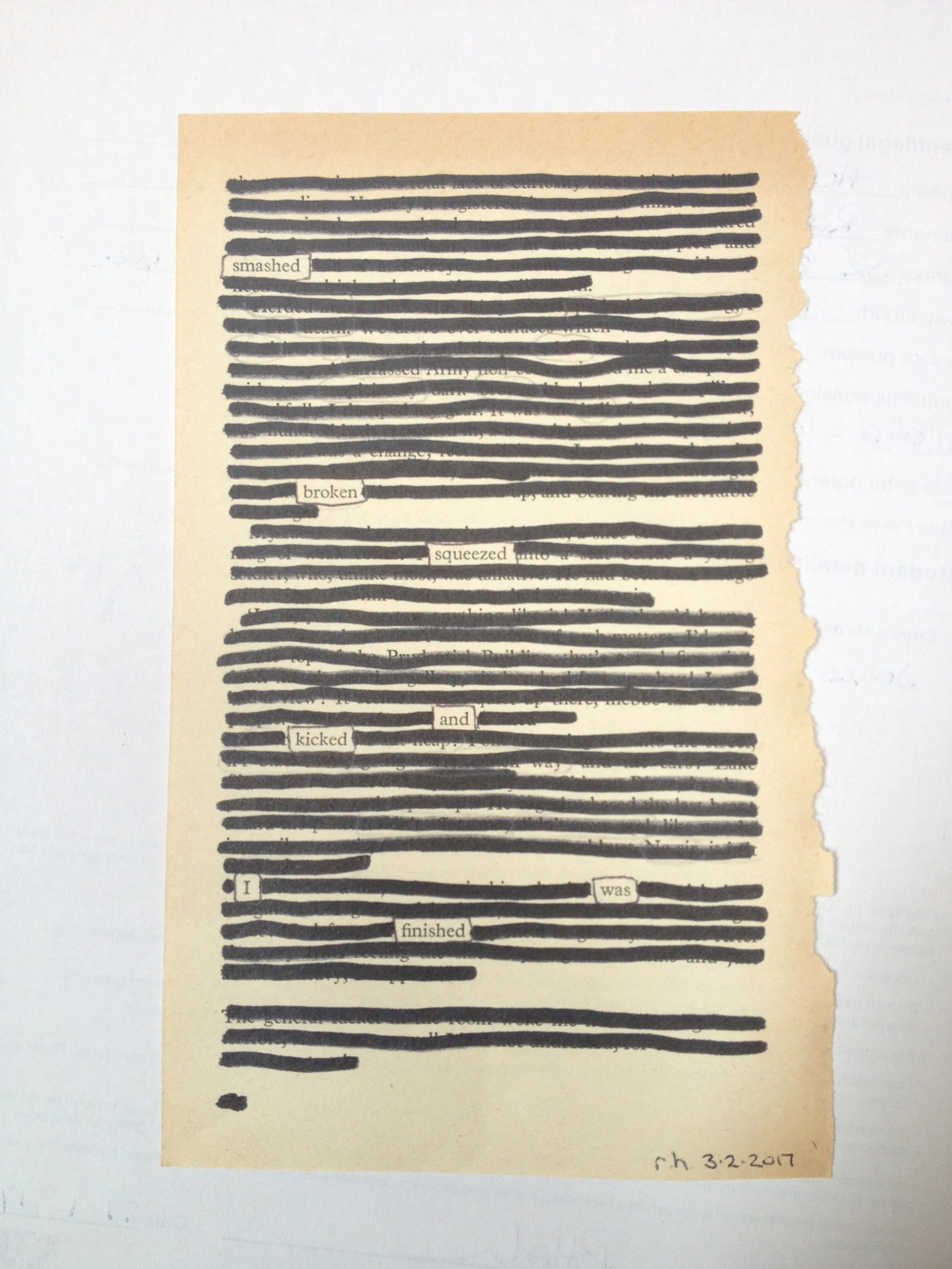
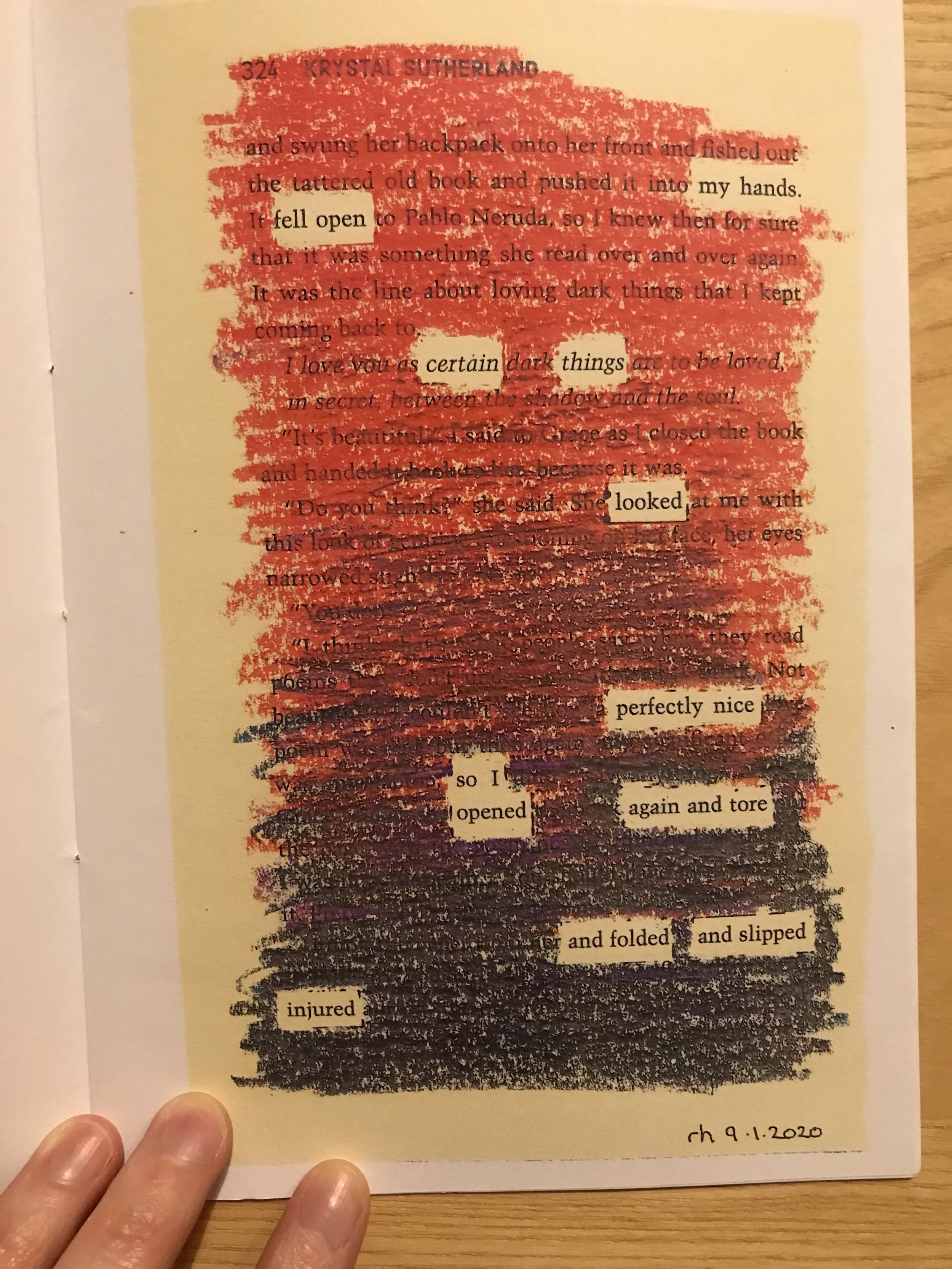
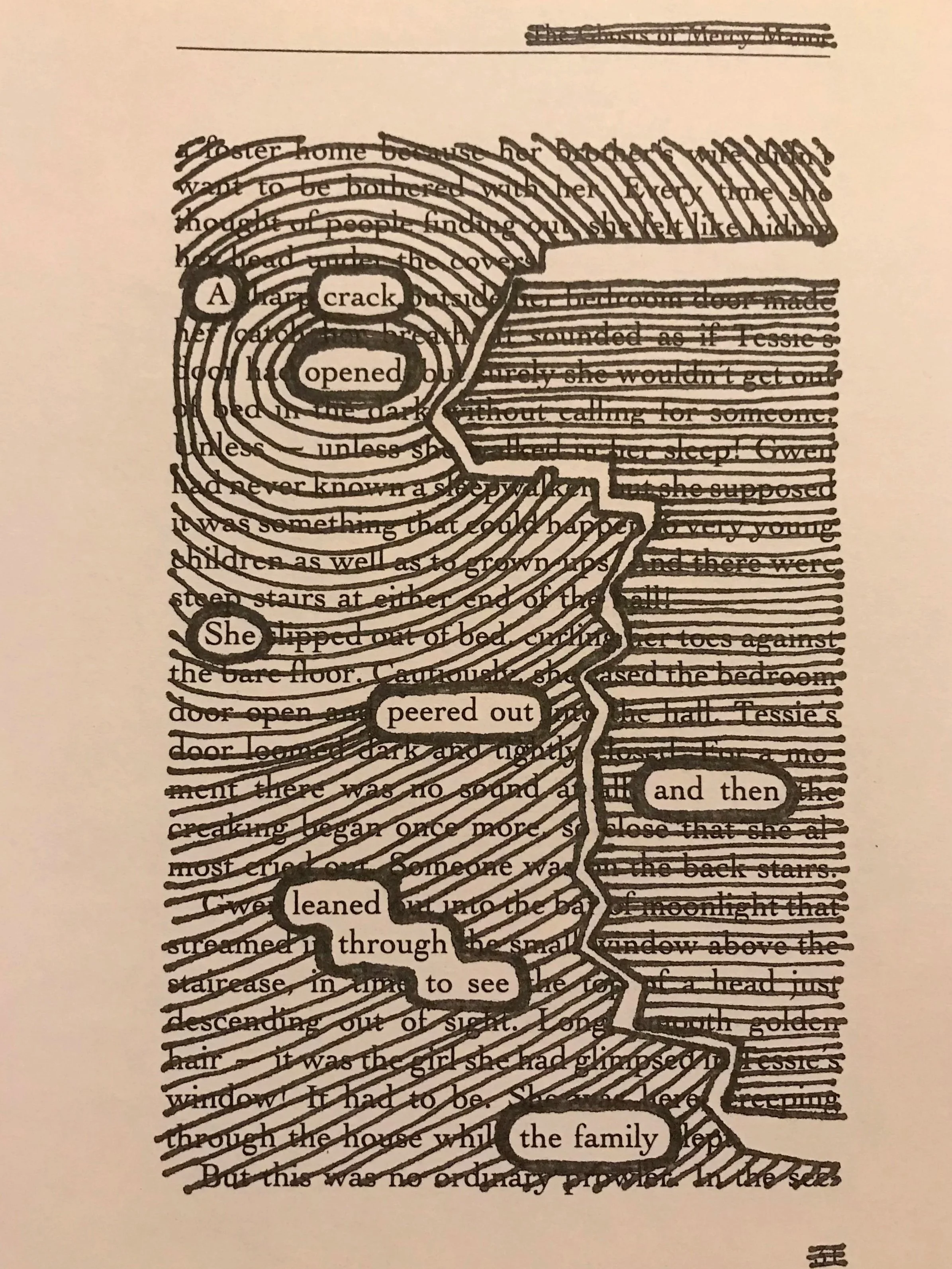
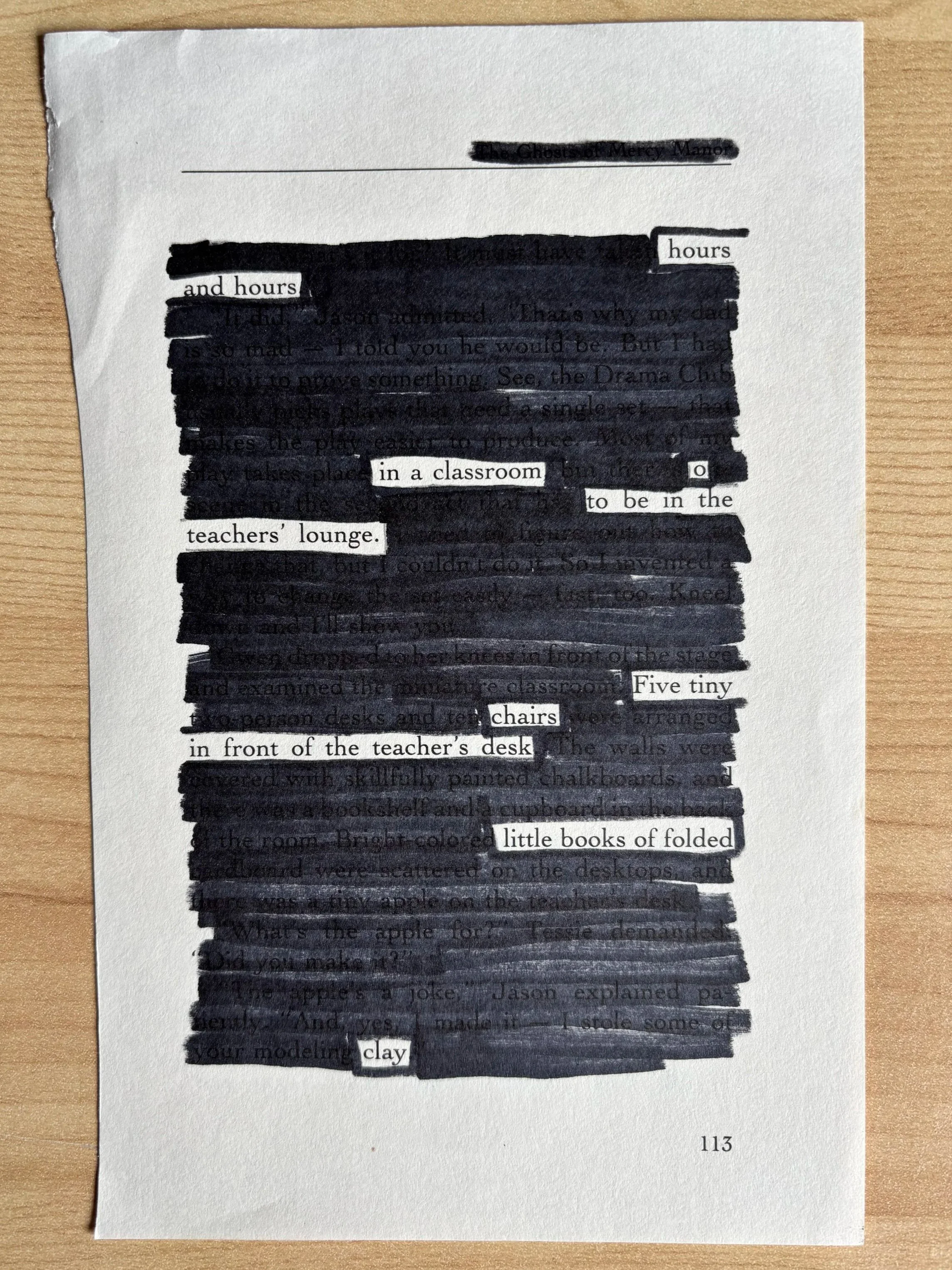
Images from my blackout poetry collection,
From Other Words.
The origins
Blackout poetry is a form of concrete poetry developed in 1965 by Doris Cross with her Dictionary Columns. Using a found block of text words are selectively saved from the blackout of a heavy marker or other “erasure” technique. Unlike cut-up poetry, the text is usually left in situ rather than further moved around or manipulated.
It is a fascinating and highly addictive creative exercise!
Materials
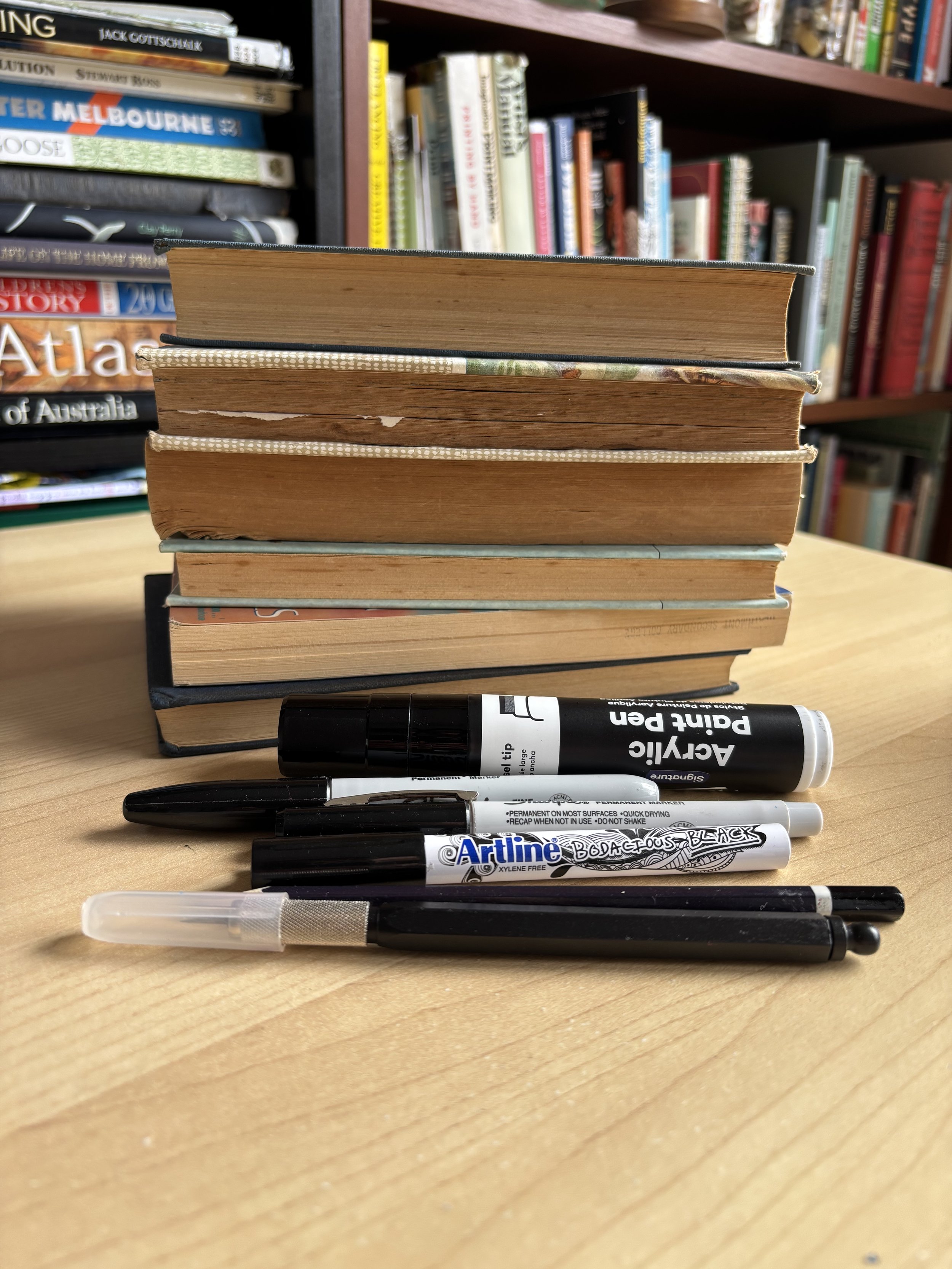
All the materials you need to start a blackout poem
Blackouts are satisfyingly straightforward requiring few materials - a pencil, a black marker and a page with writing on it are the basics. When taking a page from a bound book, a craft knife is useful if you don’t like a torn edge and of course other art materials can be used in place of a black marker to cover the unwanted words.
How-to

A page awaiting its final form
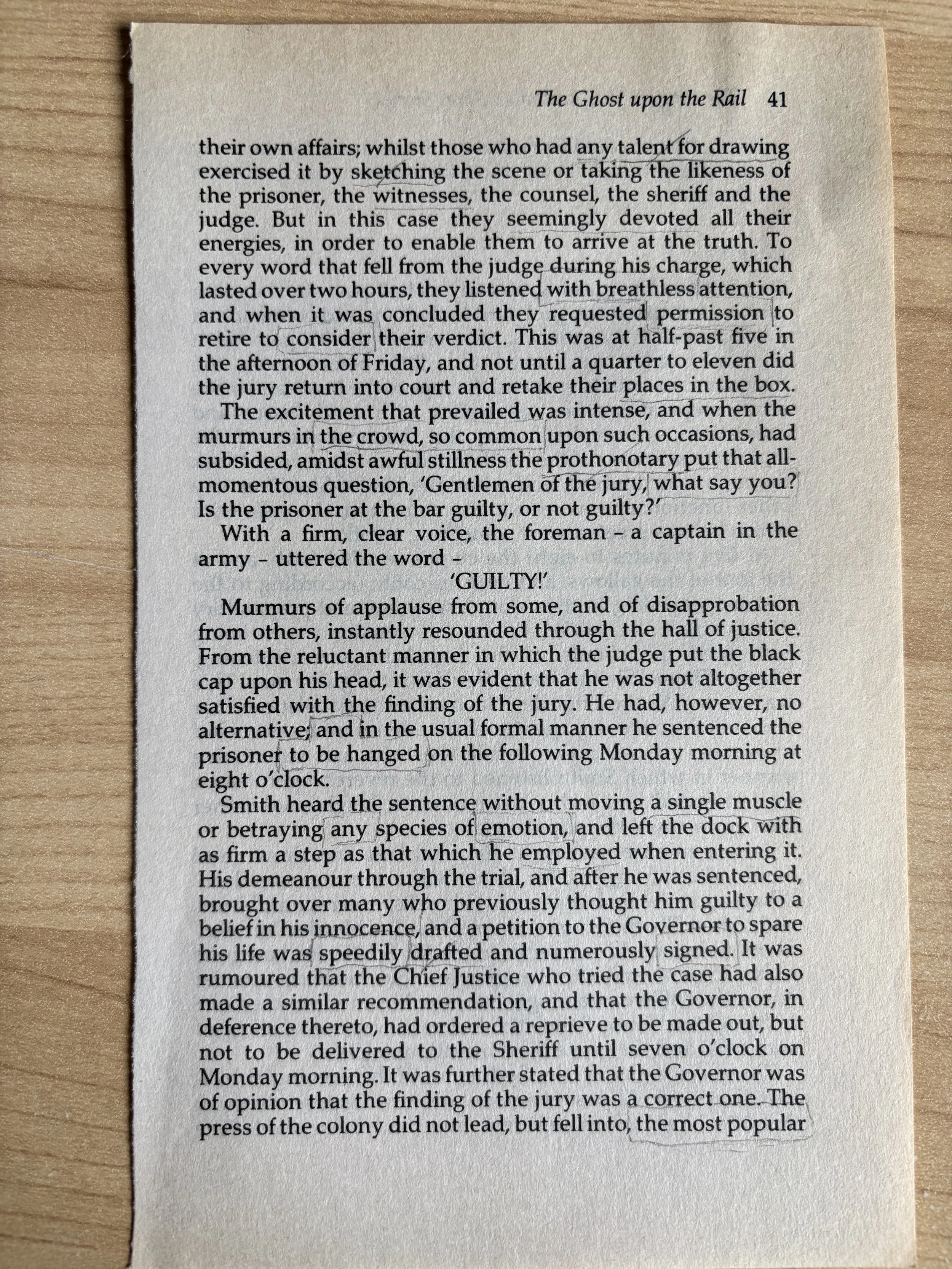
Here I have chosen a page from a discarded book of short stories, a piece of fiction. First I scan the text looking for interesting words, or any that jump out. Obviously this page has a word highlighted in the centre, and wanting to keep this, it was in mind for all my subsequent reading and editing of the page.
Use a pencil to lightly underline words and phrases that catch your eye. Then look for links. You can create words by finding nearby letters (such as “hat he wore” or “called me”) but be judicious as this can break the smooth look of the blacked out page. Read over the page several times, as it will grow on you as you go. I videoed myself doing this and was suprised to see my pencil move up and down the page a dozen times.
Editing
The page I chose was clearly a court-room scene, with the verdict blatant in the centre. The writer was not afraid of spoilers it seems. But I never want to use the actual topic of a page dictate what my interpretation will be.
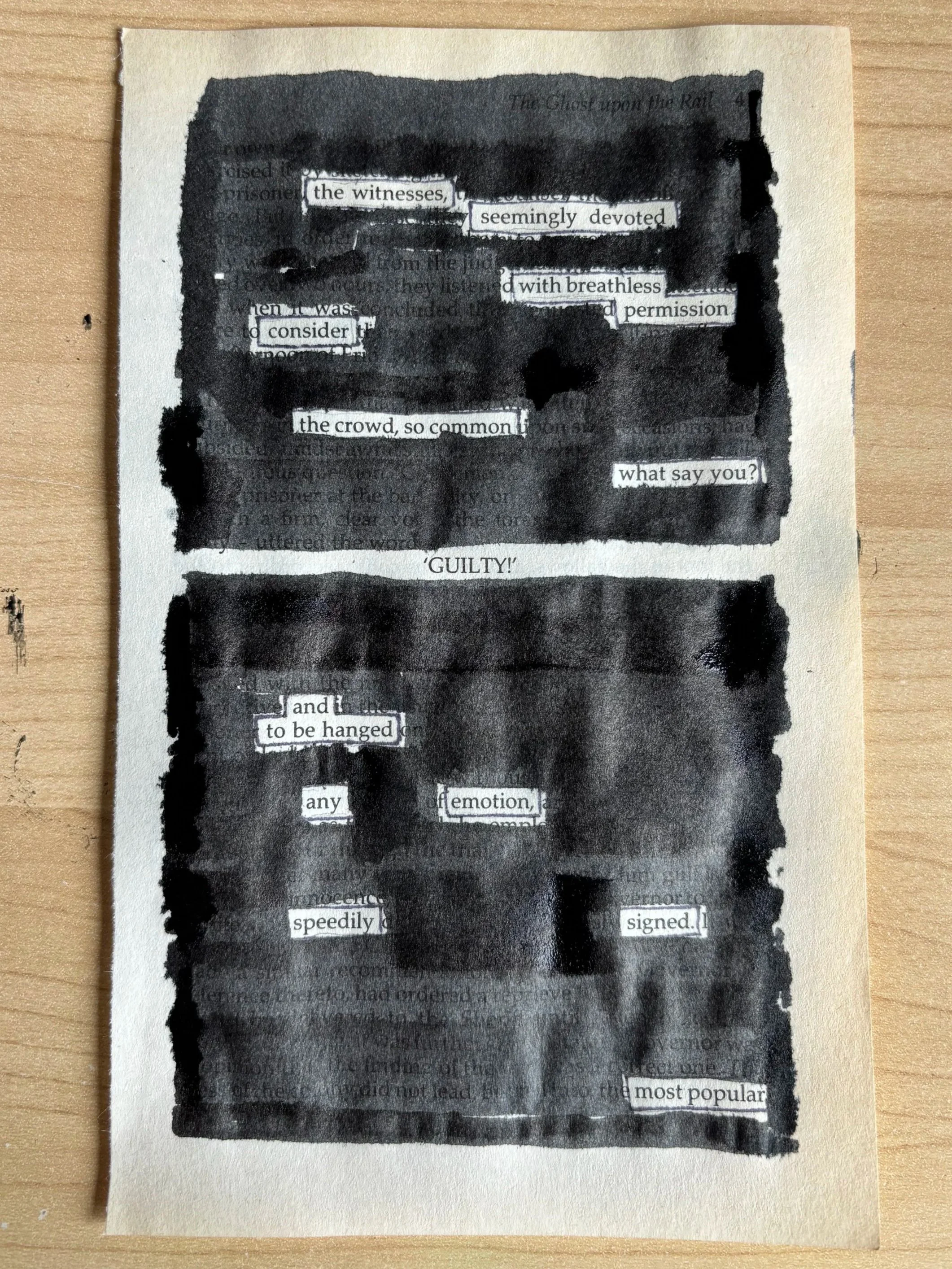
In my initial scanning of the page above, I was drawn (pun intended) to the words “drawing” and “sketching” near the top and thought my piece would be about art and perhaps its reception. But as I made connections and spotted other interesting phrases it morphed into being more around peer pressure and groupthink. I particularly liked the way “breathless permission” came together, followed by “crowd, so common”.
Don’t assume you know what your blackout poem (or any poem, really) will be about when you begin. If you try and shoehorn your preconceived notions into your work it will often come out hamfisted and obvious. Better to let the words tell you what they want and have your subconscious take the wheel.
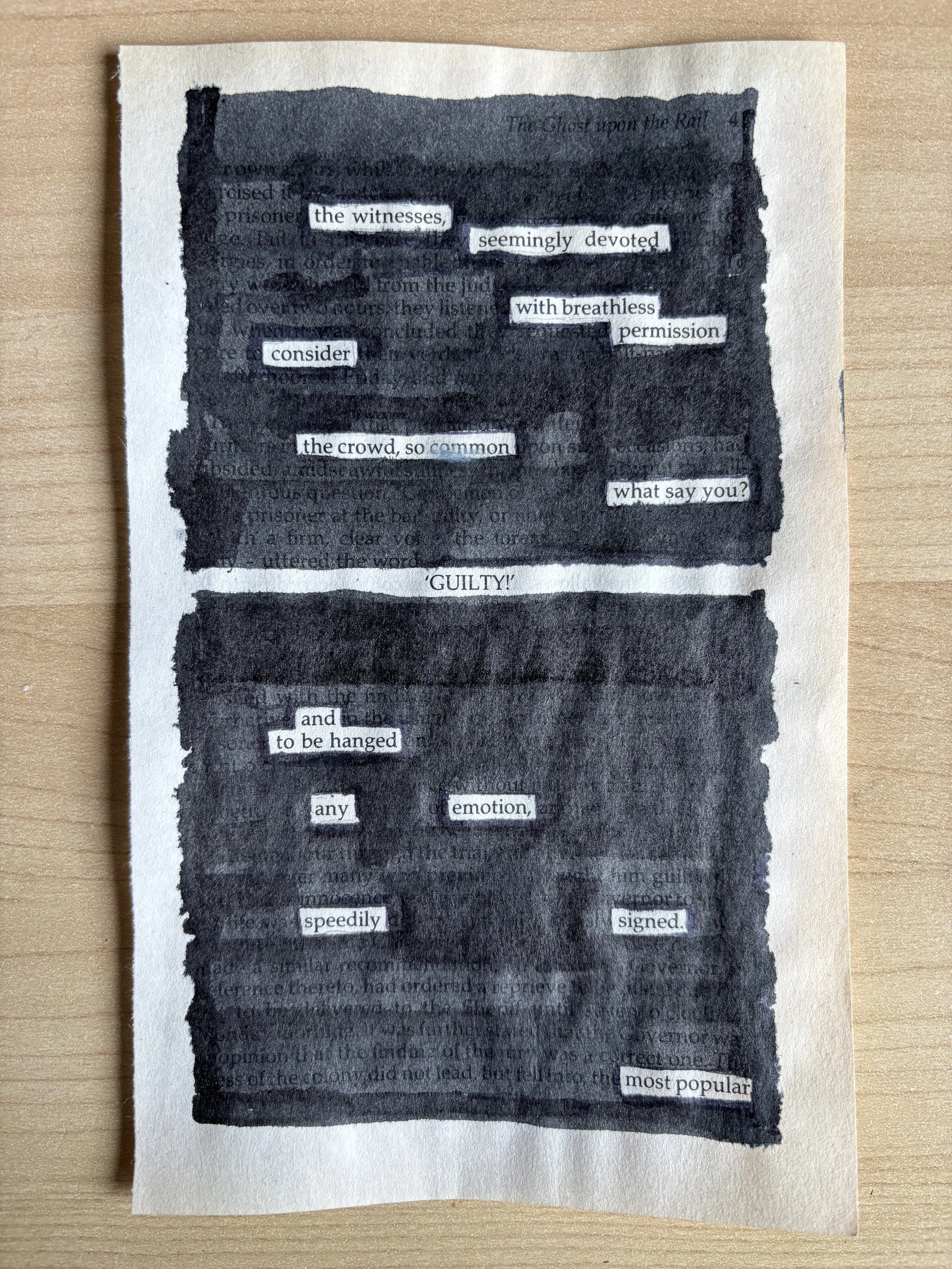
Blacking-out
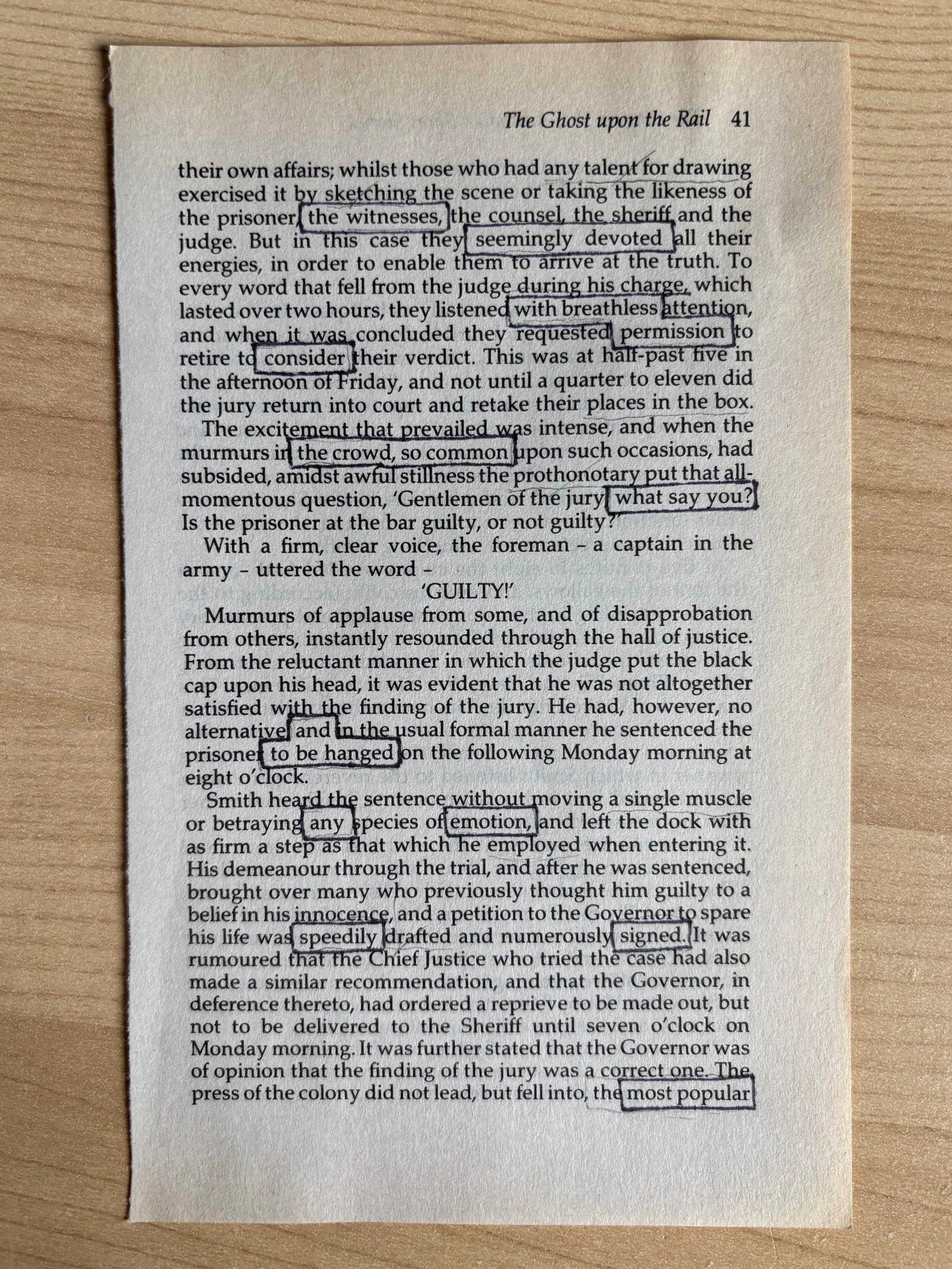
The simplest way is to use a thick black marker, but there’s no end to how you can obscure the unwanted words. First I circle my keepers in a thin black marker before going around them with a thicker one. Then I go back and finesse with the thinner marker again.
You could always lay washi tape over the keepers and go to town with coloured pencils or crayon. Draw doodles all over the page, try different colours, even glue other paper on top.
Because the papers you’ll be using will likely be quite thin, heavy paints may not work, certainly not watercolour unless you want the page to be wiggly and warped once it’s dry. But try a gouache or acrylic for a pop of colour.
Texts to try
It’s the available vocabulary of the text which will set the tone of your blackout piece. Something from a middle-grade chapter book will be more straightforward than say an article from National Geographic. If you don’t have access to a book you can wreck you can always photocopy the page you want to use. This is completely allowed* under copyright as an educational and artistic endeavour.
Newspaper columns are great for getting political (shoutout to Austin Kleon whose book Newspaper Blackout put me onto this whole thing.)
Magazine articles - older ones have a different vocabulary to modern which would be interesting to explore.
Fiction - a page with action or dialogue may be easier than a descriptive passage. Look for repeated words and synonyms to find a theme.
Old text books - look for symbols and obscure diagrams to include as part of your poem.
Non-fiction - I find using non-fic difficult as it is hard to go beyond the topic of the book.
But do try them all, it’s the only way to get lucky.
Final thoughts
The obvious note of censorship in blackout poetry lends to an inherent secrecy or coded message vibe that is revealed by the artist. I am intrigued by this aspect and as I work on my second collection, I expect to see these themes reoccurring.
Have fun making your own blackouts and, as always, I love to see your work. You can always email me with your discoveries and questions or tag @libraryburger on Instagram.
*I am not a lawyer.